If you’re trekking to Everest Base Camp, there’s a high chance your journey begins with a flight to Lukla Airport, one of the most famous mountain airports in the world. It’s often described online as “terrifying” or “the most dangerous,” but that framing misses the point.
Lukla is challenging, yes, but it’s also a controlled, professional operation designed for real-world Himalayan conditions. This guide explains what Lukla Airport is, why flights get delayed, how safe it is in context, and how to plan for it the smart way.
What Is Lukla Airport?
Lukla Airport is a small, high-altitude airport in eastern Nepal that serves as the main entry point to the Everest (Khumbu) region. Officially known as Tenzing–Hillary Airport, it was named in honor of Tenzing Norgay and Sir Edmund Hillary, the first confirmed climbers to reach the summit of Mount Everest.
The airport’s primary purpose is to connect trekkers and climbers to the trail networks leading toward Everest Base Camp and surrounding Himalayan routes. Sitting at an elevation of 2,845 meters (9,334 feet) above sea level, Lukla is already high enough for visitors to feel the thinner mountain air as soon as they arrive.
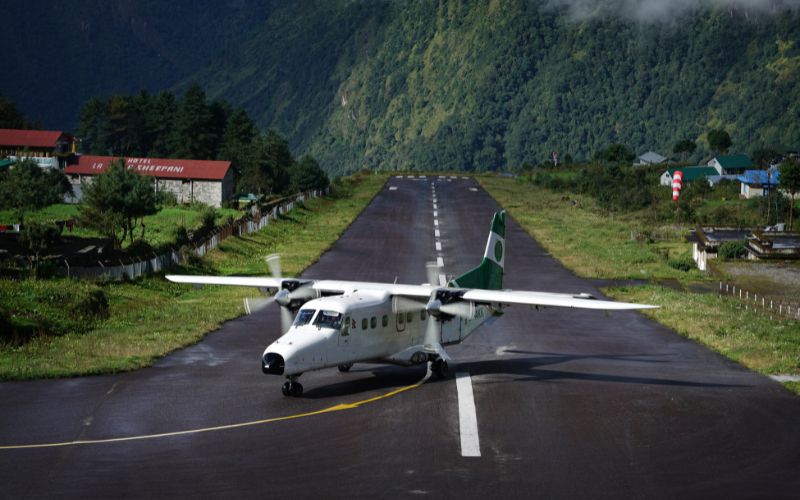
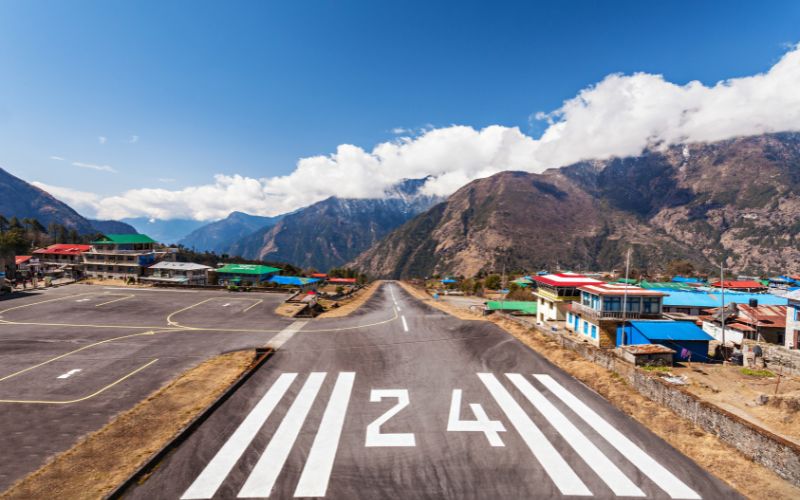
Lukla Airport is especially famous for its short, uphill-sloping runway and its dramatic setting carved into a steep mountainside. Surrounded by towering peaks and deep valleys, it looks unlike almost any other airport in the world.
Its importance cannot be overstated. Without Lukla Airport, reaching Everest Base Camp would require an additional 5–7 days of trekking each way from lower trailheads. By shortening this approach to a short flight, Lukla made the Everest region accessible to trekkers who have limited time, fundamentally changing how people experience the Himalayas.
Where Is Lukla Airport Located?
Lukla Airport is located in Nepal’s Khumbu region, within the Solukhumbu District, an area defined by steep Himalayan valleys and rugged mountain terrain. The airport is built directly into a mountainside, with little flat land around it, which explains both its unique layout and its operational challenges.
Lukla lies about 138 kilometers (86 miles) east of Kathmandu. By air, the journey typically takes 30–40 minutes, passing over river valleys, forested hills, and snow-capped peaks. Traveling by road is not possible—there are no roads connecting Lukla to the rest of Nepal.
Airplane at Lukla Airport
Because of this isolation, nearly everything used in the region must arrive by air or be carried on foot. Food, fuel, building materials, trekking gear, and medical supplies are either flown into Lukla or transported by porters and pack animals along mountain trails.
Lukla’s location makes it uniquely positioned: close enough to reach in a short flight, yet remote enough that weather delays and logistical challenges are a normal part of travel. This balance of accessibility and isolation is what makes Lukla such a critical—and unforgettable—gateway to the Everest region.
Why Is Lukla Airport So Famous?
Lukla Airport is famous for three main reasons: its extreme runway design, rapidly changing mountain weather, and its role as the primary gateway to Everest.
1. Extreme Runway Design
Lukla’s runway is unlike that of almost any other commercial airport in the world.
Length: just 527 meters (1,729 feet)
Gradient: approximately 12% uphill
Layout: a steep valley drop at one end and a solid mountain wall at the other
The runway looks dramatic because it truly is. However, its design isn’t meant to impress—it’s the only layout possible in such steep Himalayan terrain. The airport was built into the mountainside because there was simply nowhere else flat enough to place a runway.
2. Weather That Changes Fast
Lukla operates under Visual Flight Rules (VFR), which means pilots must be able to clearly see the runway and surrounding terrain in order to land or take off.
Because of this:
Early-morning flights are the most reliable
Clouds can roll into the valley quickly, shutting down operations
Wind and fog frequently cause delays or cancellations
These weather patterns are normal for high mountains and are the main reason travelers experience waiting periods in Lukla.
3. Gateway to Everest
For most trekkers heading to Everest Base Camp, Lukla is the starting point. During peak trekking seasons, the airport handles a high volume of flights in a short time window, usually in the morning when conditions are most stable.
This combination of a unique runway, demanding weather, and its importance to Everest travel makes Lukla Airport both world-famous and frequently discussed.
Lukla Airport Runway Facts
At Lukla Airport, the runway itself explains much of the airport’s reputation and its safety logic.
Runway length:527 meters (1,729 feet)
Runway slope: approximately 12% uphill
Go-around option: essentially none once an aircraft is committed to final approach
Why the Slope Actually Helps
This is the detail often missed in online discussions.
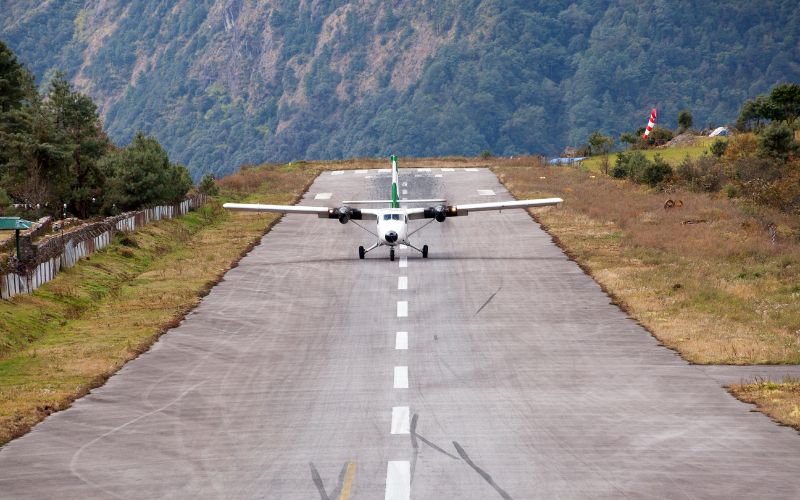
Landings are uphill, meaning gravity naturally helps slow the aircraft after touchdown
Takeoffs are downhill, allowing gravity to assist acceleration to flying speed
Operations are mostly one-directional, which keeps procedures consistent and predictable for pilots
In other words, Lukla’s runway design isn’t arbitrary or reckless. While it is short and highly technical, the slope works with the physics of short-runway flying rather than against them—helping trained pilots operate safely in an otherwise unforgiving mountain environment.
Is Lukla Airport Dangerous?
Lukla Airport is often labeled “dangerous,” largely because of its appearance and location.
The runway is very short, the surrounding terrain is steep and unforgiving, and mountain weather can change quickly. Add dramatic videos and photos circulating online, and it’s easy to understand why the airport has developed a fearful reputation.
Lukla Airport Nepal
But the reality is more measured. Lukla isn’t reckless; it’s strict.
Flights to Lukla operate under tightly controlled conditions. Only specially qualified mountain pilots are allowed to fly this route in STOL aircraft designed for short, high-altitude runways. If visibility drops, winds shift, or clouds enter the valley, flights simply do not operate. This is why delays are common and accepted as part of the process.
In practice, Lukla’s safety comes from its caution. Rules are enforced, not bent. Pilots wait for the right conditions, even if that means grounding flights for hours or days.
For trekkers, this means one important thing: your biggest risk is not an accident, it’s a delay. Weather-related delays are the most common disruption at Lukla, and planning for them with buffer days and flexibility is far more important than worrying about the flight itself.
How Flights to Lukla Work
Flights to Lukla Airport are simple in concept but highly dependent on timing and weather.
Flights from Kathmandu
Most travelers fly from Kathmandu to Lukla on small mountain aircraft such as the Twin Otter or the Dornier 228. The flight itself is short—typically 30 to 40 minutes—but almost all departures are scheduled early in the morning, when weather conditions in the Himalayas are most stable. Clear visibility during these hours gives pilots the best chance of completing the flight safely before clouds begin to build in the valleys.
Flights from Ramechhap (Peak Season)
During busy trekking months, flights are often shifted from Kathmandu to Ramechhap (Manthali) to reduce congestion at Kathmandu’s airport. For travelers, this means an early overnight or pre-dawn drive of 4–5 hours from Kathmandu, often leaving around 1–2 AM. The benefit is a much shorter flight to Lukla, usually just 15–20 minutes.
The downside is added fatigue. The long road transfer followed by an early flight can be tiring, so it’s wise to plan rest time before starting your trek.
Why Lukla Flights Get Delayed or Cancelled
Delays at Lukla are normal, not exceptional. The airport operates entirely on the basis of real-time mountain conditions.
Common reasons include:
Low cloud cover fills the valley
Shifting winds in narrow mountain corridors
Reduced visibility that makes visual landings unsafe
Congestion during the limited morning flight window
Because flights rely on visibility rather than fixed schedules, weather always has the final say. On most days, whether flights operate or not is decided by conditions in the mountains—not by timetables. For trekkers, understanding and accepting this reality makes the Lukla experience far smoother and far less stressful.
Best Time to Fly to Lukla
The reliability of flights to Lukla Airport depends heavily on the season and the weather.
Spring (March–May): Generally good weather, but very high demand
Autumn (September–November): Best visibility and most reliable flying conditions
Monsoon (June–August): Frequent cancellations and multi-day delays
Winter (December–February): Often clear skies but extreme cold and occasional snow
If flight reliability is your priority, October and April are usually the best months.
What Aircraft Fly to Lukla?
Lukla is served only by STOL (Short Takeoff and Landing) aircraft, designed for short, high-altitude runways.
Twin Otter: 15–18 seats
Dornier 228: 18–19 seats
Jet aircraft cannot operate at Lukla because they require much longer runways, higher approach speeds, and more ground infrastructure than the airport can provide.
What Landing and Takeoff Feel Like (Non-dramatic)
Landing at Lukla
The approach is narrow and focused
Touchdown is firm and controlled by design
The aircraft slows quickly due to the uphill runway
Takeoff from Lukla
The aircraft rolls downhill
The runway ends at a steep drop into the valley
Liftoff happens quickly into open air
Visually dramatic, but for trained mountain crews, it’s routine.
Practical Tips for Flying to Lukla
Add 2–3 buffer days to your itinerary
Book early-morning flights
Keep essentials in your carry-on (medications, layers, spare clothes)
Buy travel insurance that covers weather delays
Expect waiting and stay flexible
Alternatives to Flying to Lukla
If you have extra time or want to reduce flight uncertainty:
Trek from Jiri: adds about 6–8 days
Trek from Salleri/Phaplu: adds about 3–4 days
Helicopter flights: fast but expensive and still weather dependent
Frequently Asked Questions (Short Facts)
Why is Lukla Airport considered dangerous? Because of its short runway, surrounding terrain, and weather dependency—not because pilots take unnecessary risks.
How long is the runway at Lukla Airport? 527 meters (1,729 feet) with a steep uphill slope.
Do planes crash often at Lukla? No. Incidents are rare compared to decades of regular flights.
Is Lukla Airport safe for tourists? Yes, especially when flying with reputable operators and planning for delays.
Can helicopters land at Lukla Airport? Yes, but helicopters are also limited by weather and visibility.
What is the best time to fly to Lukla? October (best overall) and April (excellent), with early-morning departures.



Leave a Reply